
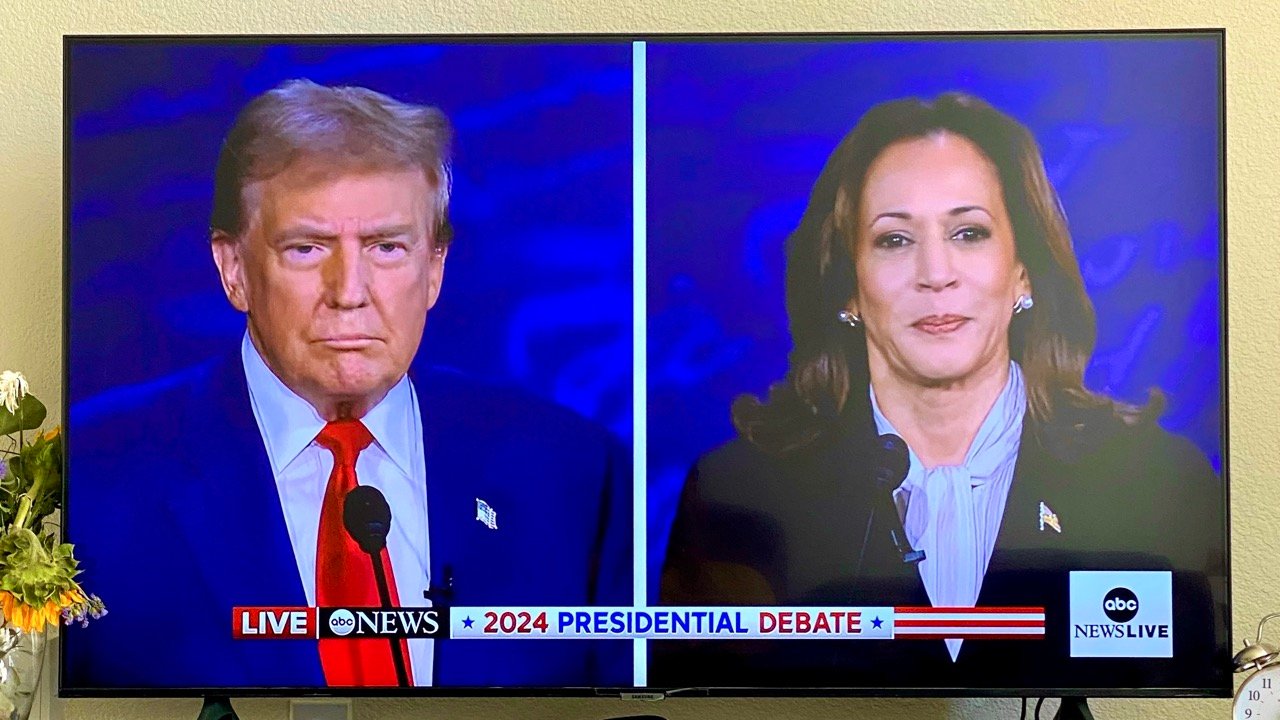
Yesterday, I watched the 2024 US presidential debate live on TV. It was a dramatic face-off between Republican candidate Donald Trump and Democratic candidate Kamala Harris.
It was a 2 hour show and both candidates were asked to present their point of views and opinions on various important subjects like state of economy, inflation, abortion rights, immigration, geopolitics (Ukraine-Russia war, Israel-Palestine war), etc.
While both candidates made their points in their distinct styles, the one thing that I will remember this debate for is how Kamala was constantly making direct eye contact with Trump and trying to engage him while Trump held a poker face and never once made eye contact with her.
US Presidential Election Process
The US Presidential election process is a multi-stage process that takes place over a period of 12-18 months. It has a lot of moving parts and can quickly get confusing but I’ll try to break it down for easier understanding.
Stage 1 – Candidates Declaration
Period: 1.5 years before the election year
Purpose: Allow candidates to declare their intention to run and begin public image building and PR, fund raising.
- Individuals announce their presidential candidature
- These individuals belong to a party
- There can be multiple candidates from the same party (eg: popular people from different states)
Stage 2 – Primaries & Caucuses
Period: Jan-Jun of election year
Purpose: Narrow candidates down to a single candidate per party.
- Primaries & Caucuses are held by each party in each state
- Primaries = Secret ballot, similar to a normal election. People vote for their fav pres candiate. Held by state gov. Higher turnout.
- Caucuses = Open ballot, public meeting. Held by parties. Lower turnout.
- Delegates = Party representatives who vote at the national convention.
- In this, people from each state vote for their favorite presidential candidate
- Based on results, delegates are alloted to the candidates.
- Delegates represent states at the party’s national convention.
- Each party has a specific number of delegates appointed in each state (eg 400 in California).
- When primary elections results are out, these delegates are proportionally assigned to the cadidates or winner-take-all.
- Eg: if Trump won 80% of the votes and DeSantis won 20% then 320 delegates will be assigned to Trump and 80 will be assigned to DeSantis
- There are pledged and superdelegates.
- Pledged delegates are bound to vote for their assigned candidate while superdelegates are allowed to vote freely for their choice of candidate at the national convention
Stage 3 – National Party Conventions
Period: Jul-Aug of election year
Purpose: Officially choose the party’s presidential and VP candidates.
- Delegates of each party attend the National Covention
- Delegates vote for the presidential candidate and finalize the name based on the primaries results
- Party platform – ideologies, agenda, policies are adopted
- National conventions mark the transition from intra-party competition to general election
Stage 4 – Election Campaign
Period: Sep-Oct of election year
Purpose: Pursuade the people nationwide to get a final vote
- Presidential candidates campaign nationwide
- Presidential debates are held
- Campaign issues and policies are discussed
Stage 5 – Election Day
Election Day: 1st Tuesday after 1st Monday in Nov
- General election takes place
- People vote for the electors representing the presidential candidate
- Winner-take-all is followed for states counting
- Counting is done and results are announced on the same day and president-elect is declared
Stage 6 – Electoral College Vote
Period: Mid December
Purpose: Officially formalize the election outcome
- After the election results, electors meet in their respective state capitals and cast votes.
- A candidate must secure 270 out of 538 electoral votes to win.
- If no candidate gets 270 electoral votes:
- House of Representatives chooses the President
- Senate chooses the Vice President
Stage 7 – Inauguration
Date: Jan 20 of next year
- Congress counts and certifies the electoral college vote and the president is sworn-in
- President and VP are sworn in on Jan 20.
And that’s how the US President is elected!


